Quote & source
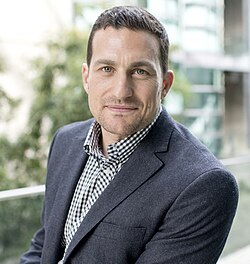
Andrew Huberman
Photo: Jamesbrianbounds · CC BY-SA 4.0 · Display cropped

“Magnesium has been shown to increase the depth of sleep”
Excerpt from a longer sentence
More from Andrew HubermanOriginal source
Opens at the start of the episode. The quote’s audio and timestamp have not been checked.
- Published
- 2021-01-25
- Source form
- Public video captions
- Where to find it
- English caption excerpt; no audio or quote timestamp checked
- Retrieved
- 2026-09-30
- Last checked
- 2026-09-30
- Source text
- Matched to the source
- Audio review
- Not checked
Context
Huberman also discusses falling asleep faster and favors threonate among several forms. This excerpt is a sleep claim, not a statement about deficiency. His publisher flags the transcript as under review; audio was not checked.
Research assessment
More certain than the research supports
Small trials suggest possible benefits, but they do not show a reliable increase in deep sleep. A recent threonate trial found no clear change in wearable sleep measures. The broader review found mixed results and low confidence.
This assessment applies to this claim. It does not cover every topic tagged above.
Research linked to this claim
Magnesium for adult sleep: 2026 systematic review of randomized trials
Twelve sleep trials, plus three movement/cramp trials assessed separately, used different forms, doses, groups, and measures. Findings were inconsistent; confidence was low to very low. The review does not support magnesium as a routine insomnia treatment. Only the indexed abstract was accessible; the full article was not reviewed.
Magnesium bisglycinate for poor sleep: 155-person randomized trial
Adults aged 18–65 with poor sleep received 250 mg elemental magnesium as bisglycinate or placebo daily for four weeks. Reported insomnia scores fell about 1.6 points more with magnesium; the effect was small. This was not an objective sleep measurement or proof of long-term benefit. An author disclosed supplement-industry research and speaking ties. The dose describes the trial, not advice for the reader.
Magnesium L-threonate: six-week randomized trial in 100 adults
Adults aged 18–45 with dissatisfied sleep received 2 g of the Magtein compound daily or placebo for six weeks. Some thinking and reported sleep-related impairment measures improved; sleep disturbance, restorative sleep, and wearable sleep measures did not clearly differ. Compound weight is not elemental magnesium. Threotech funded and helped design the trial. This does not prove a universal sleep benefit, reversal of brain aging, or superiority to other forms.